
Should We Skip Drawing?
Why it feels optional but isn’t, plus a white bean soup and upcoming classes and demos.

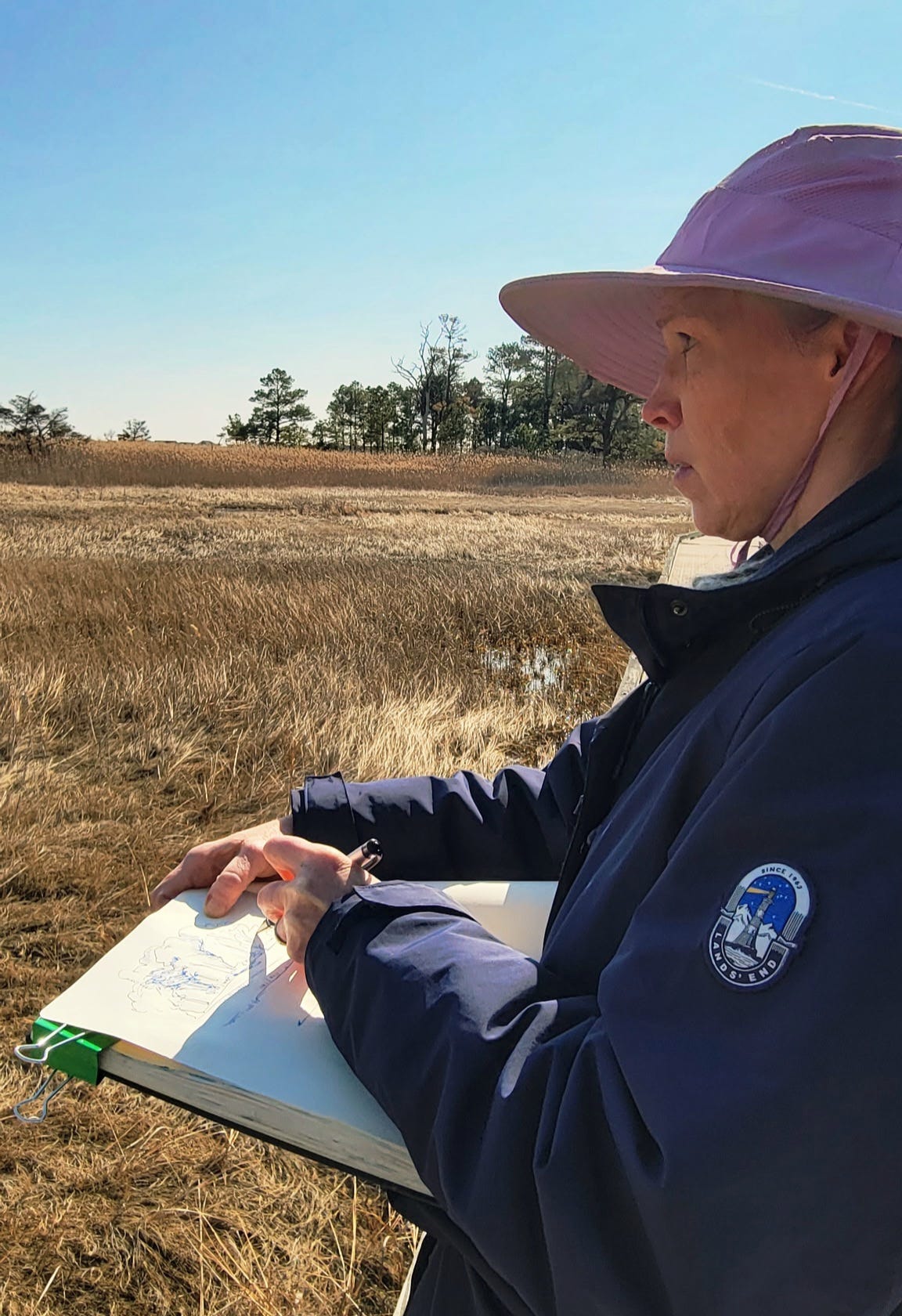
Two of my five-week courses ended this past week, and new five-week sessions begin again next week.
At the end of the sessions, several students told me I taught them things no one had ever mentioned before, things they didn’t even know they needed to know. It feels good to give students information that is actually useful and foundational.
This past week I also taught a one-day, materials-included gouache workshop — a “try it before you buy it” class. At the end, a few students asked what would happen in the longer course. When I mentioned we begin with drawing, there was concern.
“I don’t know how to draw.” I try to reassure people that it okay and I will get you where you need to be with drawing.
Painting is not advanced drawing. Drawing does not naturally flow into picking up a brush. But drawing is necessary to painting. It is the first step in observation.
Drawing is like putting on a pair of glasses and suddenly seeing clearly.
In my Sketch to Paint class, on the final day, students arrived early and immediately pulled out their sketchbooks and started drawing. I love that instinct, but I stopped them.
We were working from Giorgio Morandi, and I wanted to demonstrate something specific. Morandi wasn’t drawing objects so much as relationships — the space between forms, the overlap, the compression of space. The way one bottle leaned into another, creating tension through proximity.
I wanted the students, as they began sketching, to think about objects the way Morandi might have before he made a mark. Our intention matters. To state at the start that you cannot draw is to intend not to draw.
At the end of class, a student asked if I could give instruction next session on how to draw ellipses — bowls, plates, rims. They’re everywhere in still life. They reveal instantly whether you understand the form you’re describing, and are genuinely challenging.
Why is drawing such a chore for some?
There’s often a desire to move on to the “fun” thing, the paint, the clay, the expressive part. Drawing can feel like a waste of valuable class time when you came here to paint.
Drawing is slow and requires some boredom. To draw you must sit still with a view and keep sitting with it. It’s an exploration of boredom in order to find what is actually interesting.
You can’t snap a photo with your eyeballs and move on. You have to look. Then look again. Then look longer than feels comfortable. You might have to change your angle and move to a new observation spot. You might change your mind halfway through when you understand the form more clearly and realize your first marks were wrong. That revision is not failure. It’s learning to see.
When students say they don’t want to draw, I don’t hear laziness. I hear fear of exposure to judgement. At some point drawing fell away from their lives, and they don’t know how to get it back and are afraid that it will look childish. That fear, however, is a concern about the final product and not the important part: the process of the act itself.
Drawing is not a preliminary chore. It is discovery.

White Bean & Rosemary Stew (Spinach optional)
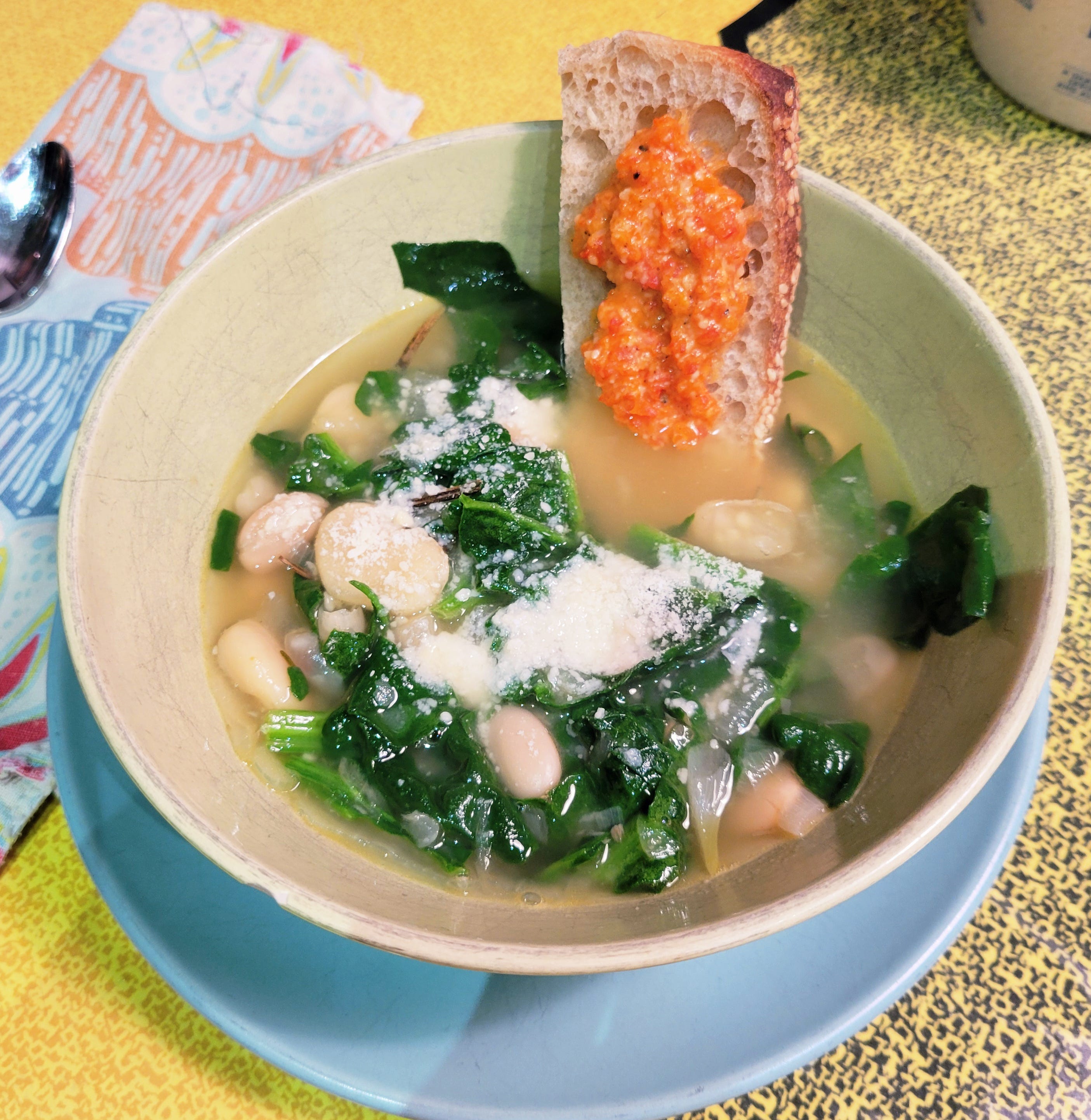
Ingredients:
2 cans cannellini beans, drained and rinsed
2–3 tbsp olive oil
3 cloves garlic, sliced
1 small onion, diced
1 sprig fresh rosemary (or ½ tsp dried)
2 cups vegetable or chicken stock
1 small Parmesan rind (optional but excellent)
Salt and black pepper
Red pepper flakes (optional)
A squeeze of lemon
Method:
Warm olive oil in a heavy pot over medium heat.
Add onion and cook until soft and translucent — don’t rush this part.
Add garlic and rosemary; cook until fragrant.
Stir in beans, stock, and Parmesan rind if using.
Simmer gently for 15–20 minutes.
Lightly mash some of the beans against the side of the pot to thicken.
Season with salt, pepper, and a squeeze of lemon.
Serve with good bread and more olive oil on top.
If adding spinach
Stir it in right at the end.
It only needs 1–2 minutes to wilt.
Taste and adjust salt after
You don’t need much. A good handful or two is enough.
If you want to deepen it slightly:
Add a splash more olive oil at the end.
Or some grated Parmesan over the bowl.
Toasted Bruschetta with Roasted Red Pepper Spread
Something to scoop and swipe through the stew.
You’ll need:
1 red pepper
2–3 tbsp olive oil
3 cloves garlic
Black pepper
A handful of grated Parmesan
Good bread, sliced
Method:
Roast the red pepper until the skin blisters and blackens. You can do this under the grill (broiler) or directly over a gas flame.
Place the hot pepper in a bowl and cover for 10 minutes to steam.
Peel off the skin, remove the seeds, and roughly chop.
Blend the roasted pepper with olive oil, garlic, black pepper, and Parmesan until smooth. Taste and adjust salt if needed.
Toast slices of bread until crisp at the edges but still tender inside.
Spread generously.
The sweetness of the pepper against the beans and rosemary works beautifully. It adds color without turning the meal into something showy.

Upcoming Classes & Demos
Ongoing & Upcoming Classes
I teach regularly at Main Line Art Center.
You can view current and upcoming courses here:
👉 See my classes at Main Line Art Center.
Watercolour Demonstration
March 21 | 11:00 AM – 1:00 PM
Kennett Copy & More
I’ll be giving a live watercolour demo for Winsor & Newton and talking through process, materials, and structure related to flower painting.
Space is limited, and registration is required through the store. Please contact Kennett Copy & More directly to reserve a seat.

Thank you. This is lovely. I feel more relaxed now.
Thank you for saying this. I 100% concur, and I feel lucky that I enjoy drawing. It’s also a great mind eraser when life becomes stressful.