
You'll Make It Work

The Man at the Junk Shop
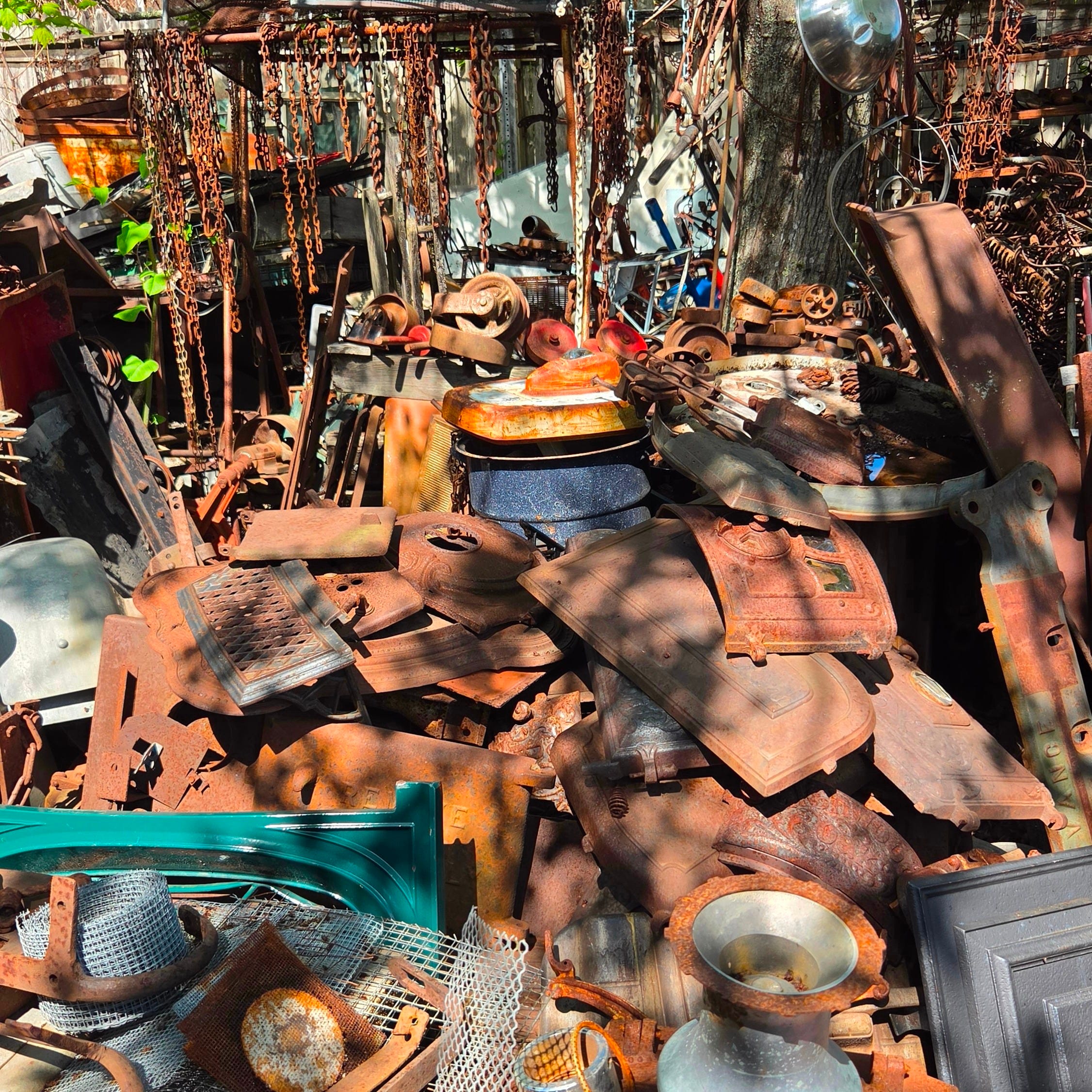
I pulled into the gravel driveway of a salvage place just north of Searsport on my way back from painting in Belfast. There was a rope across the entrance and a man unloading a pickup truck. He looked up with the particular skepticism Mainers have perfected.
I asked if they were open. No, weekends only, but he was unloading, and if I was looking for something specific, he’d let me poke around.
I was looking for an oven door. “Are you building a pizza oven? Everyone’s building pizza ovens right now,” he told me. Well, he wasn’t wrong as I had built one last summer. He directed me to a barn and around the back, a pile of old oven doors: cast iron, some rusted, some with beautiful enamel still intact. I found a gray enameled door with an old temperature gauge and the original hinge pins still in place.
He came back to check on me and sized up the problem — no frame, just a door, a finished oven with an opening that needed to be fitted. He started to explain how difficult it would be without the right metalwork, how I’d need someone who could —
I said I was an artist.
He stopped. “Oh,” he said. “You artists, you always know how to do this. I don’t need to tell you anything. You’ll make it work.”
I am often talked down to as a woman. It was refreshing to be seen as capable — immediately, without having to prove it.
We had a good conversation about art and junk, and he waved me off onto my drive north with a warning about how bad the ticks are and to be careful.
Solitude
I’ve been at our house in Maine for almost a month. My husband is home in Philadelphia with the kids. It’s the longest I’ve been away from my family, and I don’t feel guilty about it.
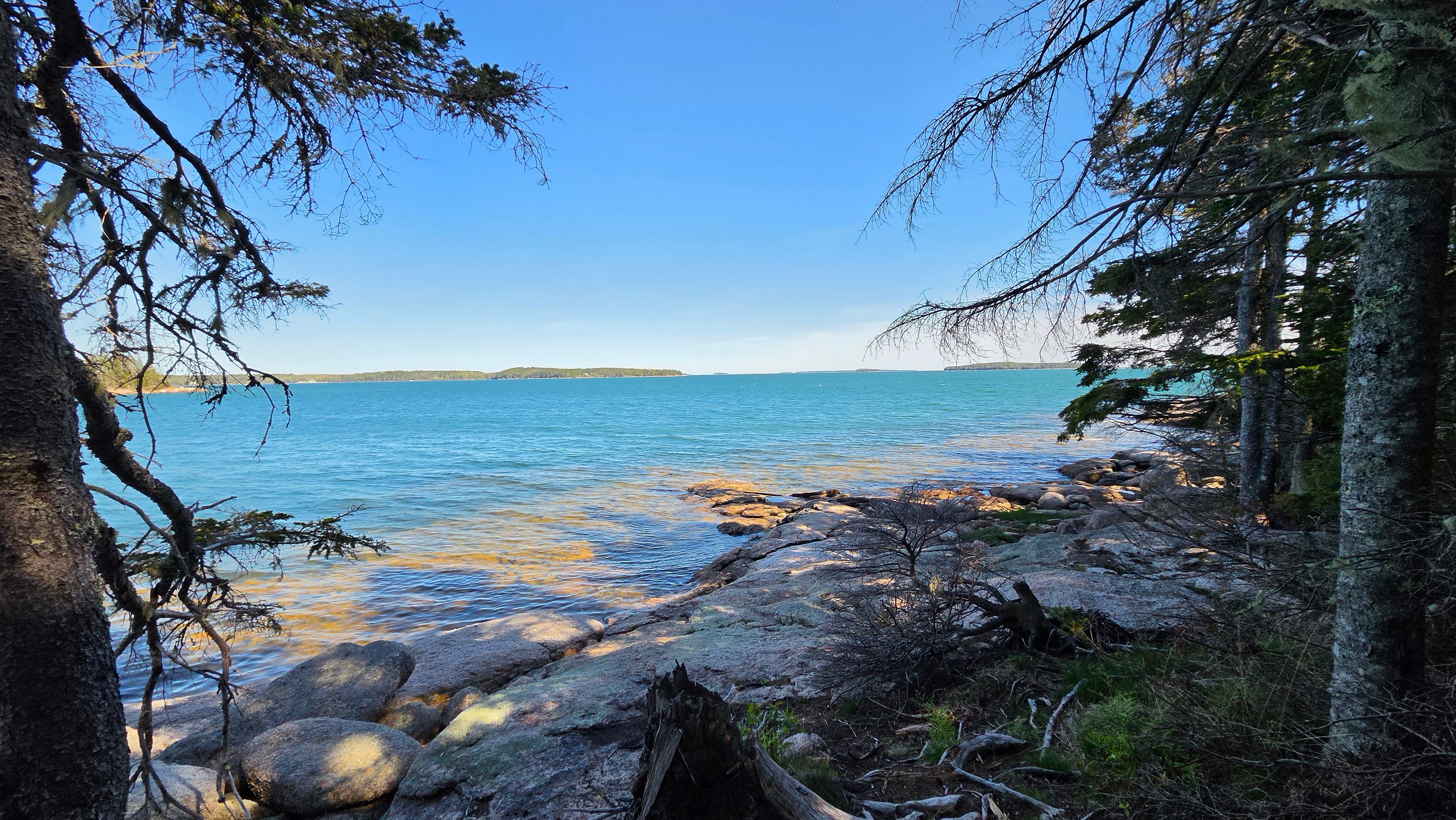
Maybe I would have when my kids were small, but they’re teenagers now, self-sufficient and more interested in their own lives than in whether I’m in the house. The solitude here isn’t loneliness. We forget that we need the absence of the particular obligations that come with people who depend on you, not the people themselves. No one is calling my name from another room. No schedule but my own.
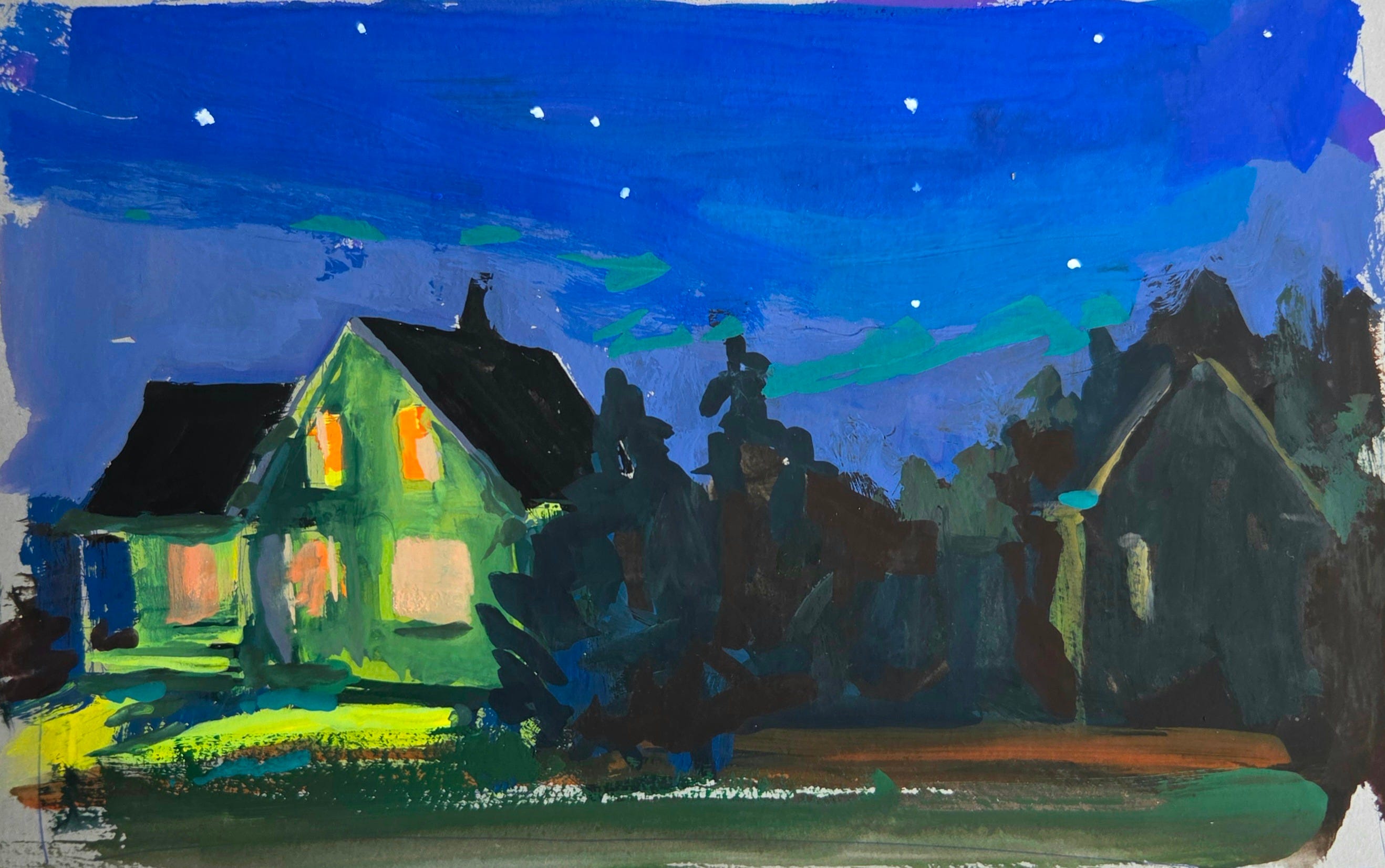
I love how the nights here are wonderfully dark and you can hear the foghorn on Marks Island, the peepers, the owls, the 4 AM diesel engines of lobster boats on the water. The air smells of salt and pine.
The Eyes Adjusting
After a winter of painting landscapes from drawings and photos indoors in Philadelphia, my eyes were calibrated for urban, diffuse, filtered-through-windows kind of light.
Maine in May is something else entirely. When I arrived, the trees were barely budded — the season here runs weeks behind Philadelphia’s. Now everything has leafed out, which means the greens have changed even since I arrived. The light here bounces because there is water everywhere, reflecting it back, multiplying it. The days are longer. Sunrise earlier, sunset later, the light shifting across a longer arc.
The first few times I went out to paint I was struggling. Nothing I was putting down looks like what I was seeing.
Part of what I’ve been working through is technical. I’ve spent a lot of this past year teaching color more in depth than I ever had before, examining things I thought I already understood. That kind of deep teaching works its way back into your own practice. There’s a period where you know more than your hand has yet learned. You have to think through things you used to do by feel and intuition, but you don’t have the fluency yet.
The main thing I’ve been fighting is value. When you paint landscape outdoors on site, there’s a strong tendency to paint everything too dark. Brightness reads, to the eye, as darker or more colorful so you make the darker mix, and then everything is heavy. What I’m trying to build instead is more variety across the middle range: not just lights and darks but a whole spectrum of midtone, more subtlety in what I’m actually seeing.
I’ve also been switching between oil and gouache on the same trip, which requires two different mental frameworks. Oil mixes to its final value. Gouache shifts lighter as it dries — what you put down wet is not what you’ll have. You’re always working in translation.
Then there’s the practical fact that I tend to set up in the shade, because I’ve had skin cancer and I’m careful about sun. Which means my palette and panel are also in the shade. Which means I’m unconsciously compensating for a dimmer viewing environment, making everything darker still.


It’s a lot of variables to untangle at once. However, I’ve had a couple of paintings in the last week that feel like something is starting to click. I come back to the house and sit with them, and they don’t embarrass me the way the early ones did.
Sidequest
I should tell you about the kitchen floor.


I came up here with a clear list: plumbing, specifically the kitchen sink I’ve been meaning to properly install; work on the pizza oven Aidan and I built last year; and make paintings.
What happened was: I did the plumbing, which took longer than expected and uncovered other things that needed doing. I noticed some rot on the porch that I hadn’t seen before. The grass came in thick with all the rain, and the ticks are really bad this year — the man at the salvage yard who had just finished a round of antibiotics for Lyme, told me he’d never seen it this bad. So working in the yard required a whole additional layer of caution and gear.
And then I looked at the kitchen floor, which was covered in two layers of linoleum that were gross, and I thought. “I have time. I could do something about that.” I had had a dream a few months ago about a floor painted in a pattern lobsters and whales.
It took four days, multiple coats, moving the refrigerator in and out more times than I’d like to count. But I painted the floor in four colors, and it looks so good I keep going in just to look at it. The linoleum I hated is gone. Something I made is there instead and I love a painted floor.
This is a thing that happens to me, and I’ve stopped trying to fight it entirely. My brain, when given space, does not stay inside the designated boundaries of the plan. It wanders toward whatever needs attention or offers the most immediate creative satisfaction. The pizza oven door I found in Searsport is sitting in the yard waiting to be fitted. The rot on the porch has been assessed and, by the time you’re reading this. at least on the way to being fixed. The paintings from this week are stacked against the studio wall.
It’s all moving. It just doesn’t move in a straight line.

Take An Art Class With Me This Summer.


Wallingford Community Arts Center
These two classes can be taken independently or in sequence.
Light First: Intro to Oils in Black & White Are you overwhelmed by color and not sure where to start? Light First begins with the one thing that makes every great painting work — light and shadow. In this four-week class you’ll build a real foundation in oil painting by working exclusively in black and white, painting from still life arrangements in the studio. You’ll learn to mix consistent tones, see light and shadow as shapes, control your edges, and organize a painting before color ever enters the picture. Calm, structured, and beginner-friendly. No experience necessary. Mondays, June 22–July 13 | 6–9 PM Register here
Color and Light: Building Your Painting Color doesn’t have to be overwhelming. This four-week class is built around color temperature and a limited palette. Working from still life in the studio, you’ll learn how warm and cool relationships create the illusion of light, how to mix clean, consistent color, and how to build a painting with a limited set of pigments. Practical, hands-on, step-by-step from day one. Mondays, July 20–August 10 | 6–9 PM Register here
Main Line Art Center
Watercolor: No Experience Necessary! If you’ve ever wanted to try watercolor, walked into an art supply store, felt completely overwhelmed, and walked back out — this class is for you. This seven-week course is designed for anyone who wants to learn watercolor and doesn’t know where to begin. We’ll start with the basics, how the paint actually works, and build from there through simple, guided exercises. Each week adds a new skill, so by the end you’ll have a real foundation and the confidence to keep going on your own. Tuesdays, June 30–August 11 | 6–9 PM Register here.
Gouache: The Medium You Didn’t Know You Needed! Beloved by illustrators, designers, and painters who know its secret — and overlooked by everyone else. Gouache has the ease of watercolor but dries to a rich, velvety matte finish, layers opaquely, and behaves like oil, acrylic, or watercolor all in one. Once you try it, you’ll wonder why it took you so long. In this class we’ll explore layering, blending, and color mixing, and learn to build images from simple shapes — working both light to dark and dark to light. Whether your interests lean toward fine art, illustration, or just a paint you can take anywhere, gouache may be exactly the medium you didn’t know you were looking for. Thursdays, July 2–August 13 | 6–9 PM Register here.
Winsor & Newton Demo — Jerry’s Artarama, Princeton/Lawrenceville, NJ
June 6th, 11am–4pm
I’ll be demoing watercolor and gouache at Jerry’s Artarama as part of their Artist Alley event — 50+ artists and crafters showing fine art, jewelry, printmaking, ceramics, and more. Come by the store, try out some paint, and say hello!

That problem with darkness? I have it too -- with photographs. If I take a perfectly technically wonderful photo of (say) a field if green speckled with dandelions, daisies, and clover, by the time I'm done fussing with it in Lightroom or Photoshop, and then send it off for printing, it looks like it was photographed by Munch. The problem is that light shining THROUGH an image makes it look too bright... so I overcompensate.
It reminds me of my old very cynical college friend. When I told him that his cynicism was getting in the way of relationships with people, he was genuinely surprised. "Really?" he said. "I don't think I'm cynical ENOUGH!"
Like, duh. 🙂
Great issue…. That kitchen floor is too wonderful !!!!!